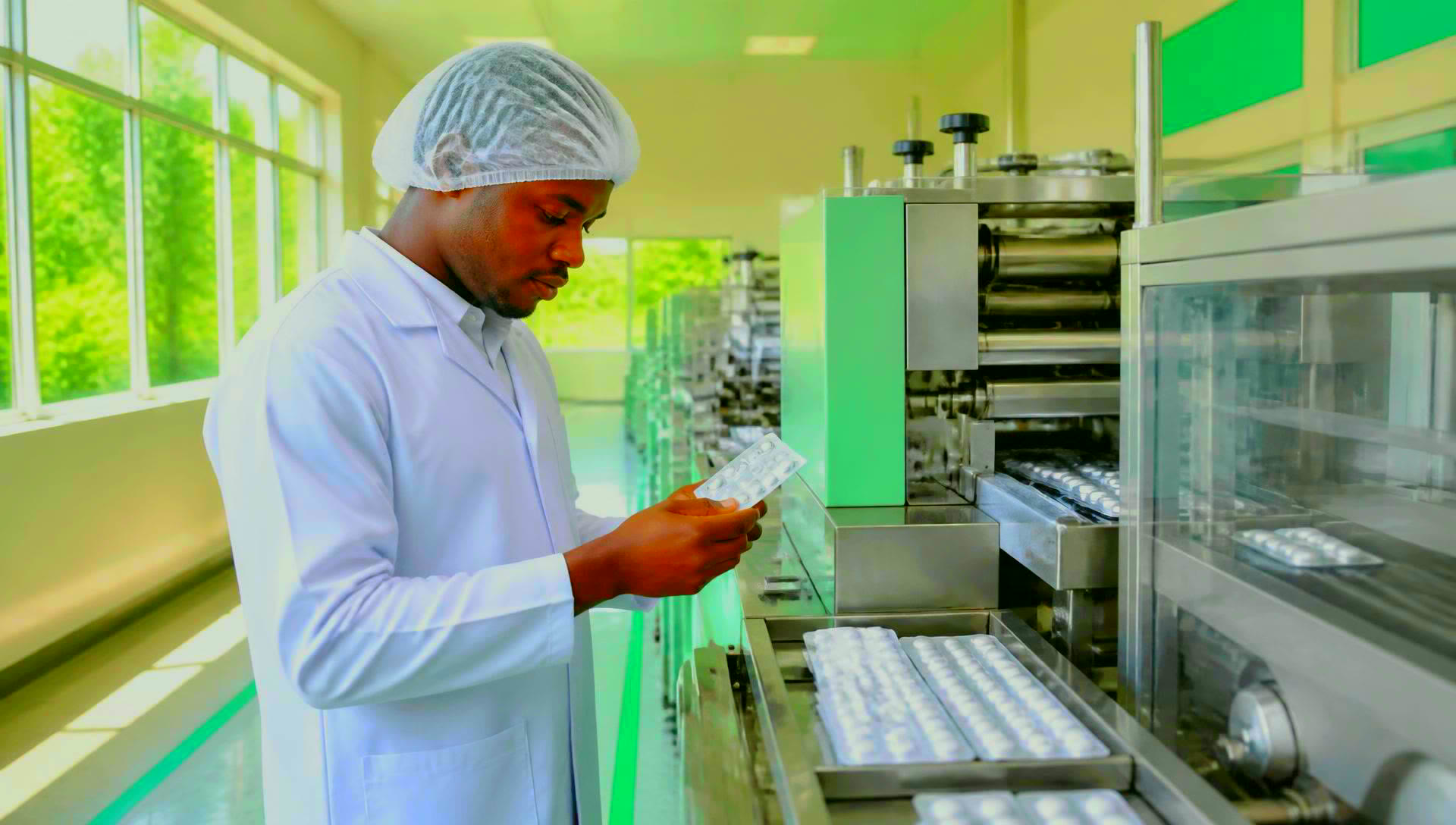
Every pack is identifiable
A unique serial sits under the label, so a vendor or a client can confirm a pack is genuine before it is used.
Affordable Diagnostics and Medicines Facility for malaria
A federal subsidy that reaches the counter where households actually buy care, on commodities made by Nigerian manufacturers, with every naira accounted for.
One person has a fever and makes one decision. Untested, everyone with a fever is given an antimalarial, and most of them do not have malaria.
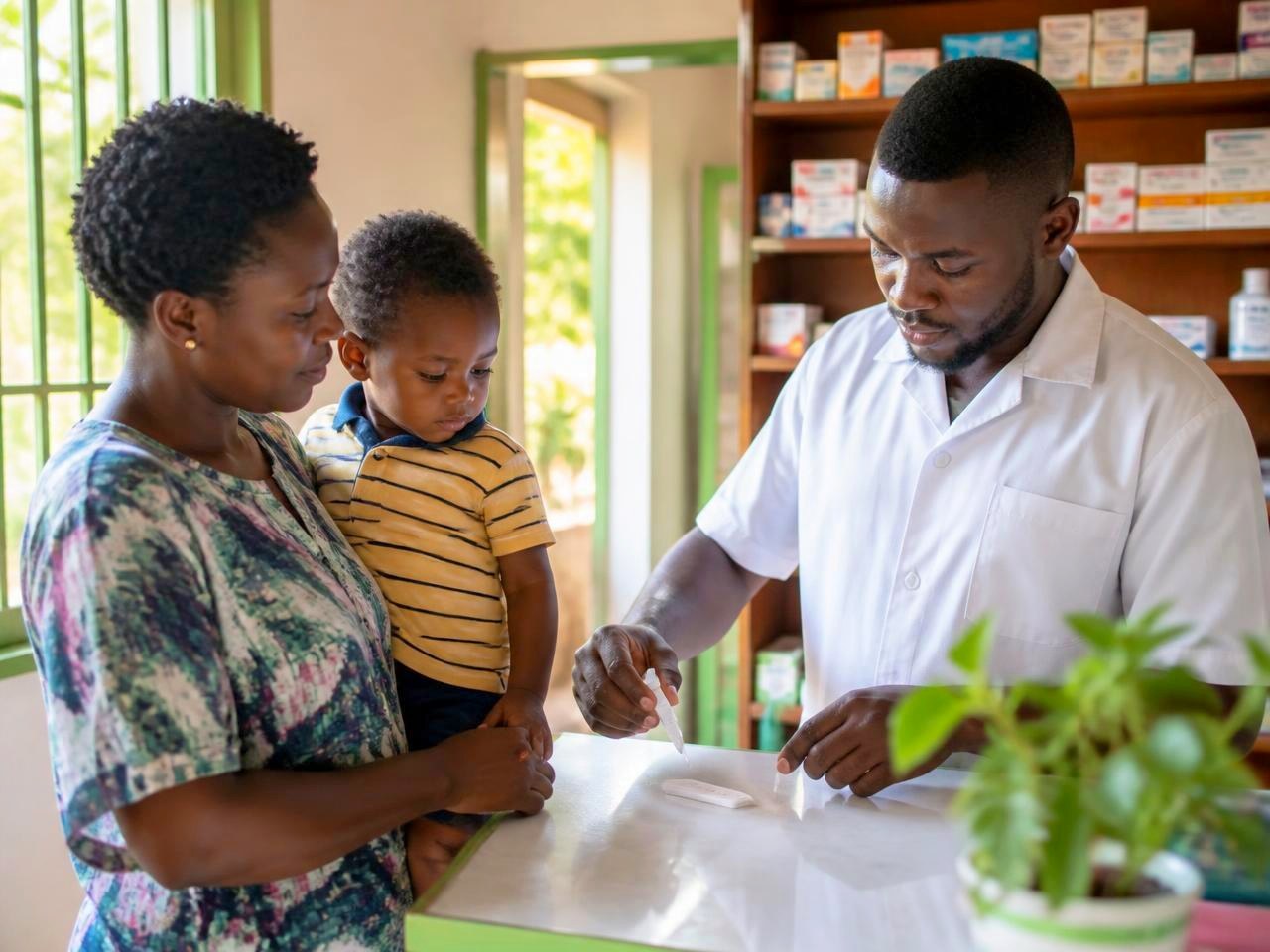
The vendor can test first, or treat on guesswork. This is the arithmetic the household is deciding against, with the paediatric course, AL-1, 6 tablets.
₦650
What one rapid test costs to deliver, of which the family pays ₦300 at the counter and the Facility carries ₦350.
₦615
What one course of AL-1, 6 tablets, costs to deliver, of which the family pays ₦300 and the Facility carries ₦315.
64.0%
The share of tested fevers that are not malaria, measured at programme scale across the 2,160 local government area days of daily aggregates.
₦393
Therefore the medicine one test saves, on average: the negative share of fevers multiplied by the cost of a course.
₦257
The amount by which the test costs more to deliver than the medicine it saves, for a child. Testing is the clinically correct step and the financially worse one, for the household and for whoever pays.
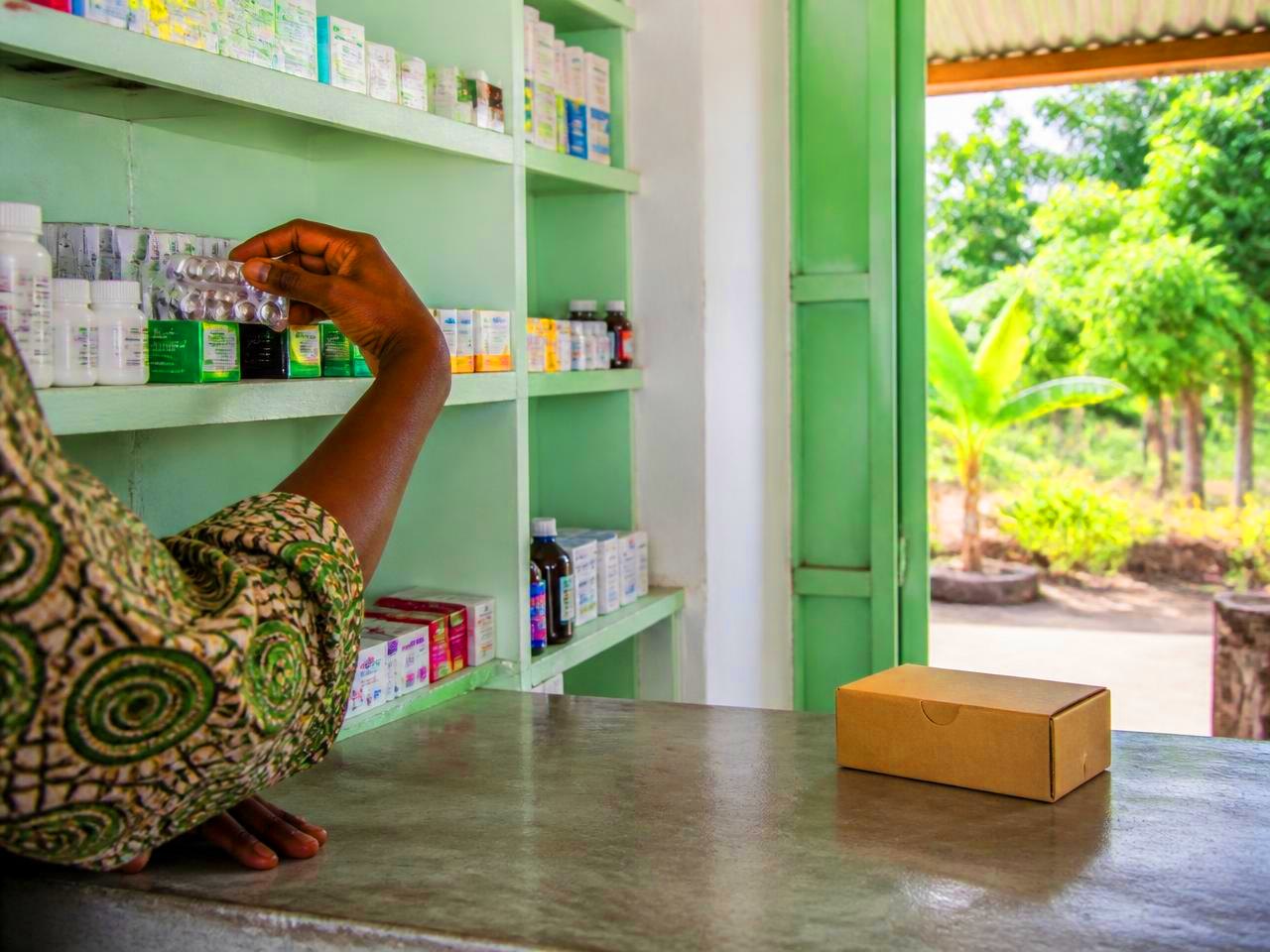
The adult course, AL-2, 12 tablets, is the most expensive commodity in the Facility to deliver at ₦986, so the medicine a test saves is worth the most here: ₦630 against a test costing ₦650 to deliver.
Even here the test loses, by ₦20.
A test that never pays for itself is a test nobody buys unaided, which is why the Facility subsidises the test and not only the medicine.
Each organisation carries a defined responsibility, and the boundaries are written down.
Programme owner
Technical direction and case management standards
Co-lead on the subsidy and on shaping the market
Product registration, quality assurance and recall authority

Fidson and Emzor for antimalarials, Codix Bio and Naseni Troment for test kits
The identifier standard every pack carries

Financing

The digital layer
Manufacture, identification and reporting all sit with Nigerian institutions across 6 pilot states.

Pilot states: Abia, Lagos, Rivers, Ekiti, Borno, Ondo.
What the technology is for, in four outcomes, each of which a reviewer can open down to the events behind it.
A unique serial sits under the label, so a vendor or a client can confirm a pack is genuine before it is used.
The rapid test is read with AI assistance from a photograph and compared against the provider's own reading, so a diagnosis is recorded rather than asserted.
Registry, stock, price, dispense, verification and follow-up are the same records, so any figure can be opened down to the transaction underneath it.
Clients are followed up at day three and day ten, so the record shows whether someone recovered and not only whether a product was sold.
₦2.04 billion of subsidy, accountable to a single ₦300 test.
Every figure in the dashboard is computed from one event ledger at the moment the page loads.